James Ridey

Full-stack software engineer. Five years at Canva, now the primary owner of Nullify’s rebuilt frontend.

I enjoy hard debugging and performance work, from framework internals to Go services and CUDA kernels. Outside work I build hardware, including an 8-bit CPU that was fabricated as a real chip.

Sydney, Australia · Australian citizen (E-3 eligible) · Relocating to the San Francisco Bay Area

Professional experience

Nullify

Product Engineer

March 2026–present

Rebuilding the frontend

I rebuilt Nullify’s frontend from the ground up with Vite and an atomic component architecture, now 470 components. I owned the architecture and built most of the features, and cut the compressed initial JS and CSS from 932 kB to 453 kB.

AI-generated code kept making the same mistakes, like adding new buttons instead of reusing existing ones. I defined ESLint rules for component dependency direction, colour tokens, and shared primitives so those mistakes fail the lint.

For visual regressions, Playwright screenshots selected Storybook components in light and dark themes on the PR and its base, ImageMagick diffs them, and the differences are posted on the pull request. End-to-end tests cover the main UI flows.

Backend startup time

Removing OpenAPI reflection from Go startup cut Lambda initialisation from 1.9 s to 1.1 s in a development deployment. Keeping a Python process alive across warm invocations cut Python startup overhead from 9.7 s to 50 ms.

Tracking down broken links in Next.js

Links stopped responding after a Next.js upgrade. I spent several days stepping through JavaScript in the browser and comparing the execution with the framework source to understand the failure. I found the cause and wrote a patch.

Prefetching in a static export was receiving HTML where it expected React Server Component data. By the time I had a patch, someone else had already addressed the same bug.

Related Next.js issue
Canva

Software Engineer

2020–2025

Previews for Magic Design

Magic Design needed to preview generated text and selected photos in preset layouts outside the editor. Rendering each design as a full DOM tree slowed the page down. I searched Canva’s codebase for another approach and found the editor’s canvas renderer.

I adapted it to produce image previews and agreed the reuse with the editor team. By my estimate that saved months compared with building a separate renderer.

Team Brain

I worked with a backend engineer on Team Brain, a RAG prototype that answered questions using users’ documents. I built the frontend, and we demonstrated it together.

Marketplace

I redesigned Marketplace’s search filters, which also reduced their API response time, and added Forms, Polls, and Quizzes to the editor’s search panel.

Google

Software Engineer Intern

2017–2019 · Two summer internships

Neighbourly on a retail KaiOS phone

I extracted and reverse-engineered a factory-test app on the phone. Its network diagnostic had a command-injection vulnerability, which I used to enable development access on the retail device.

I then ported Neighbourly to KaiOS/JioPhone. Keeping the app small enough and running within 512 MB of RAM were the main challenges. I also wrote the team’s first porting specification.

ThoughtDesign

Junior Software Engineer

2014–2017

Built web applications using ASP.NET MVC and Angular.

Personal projects

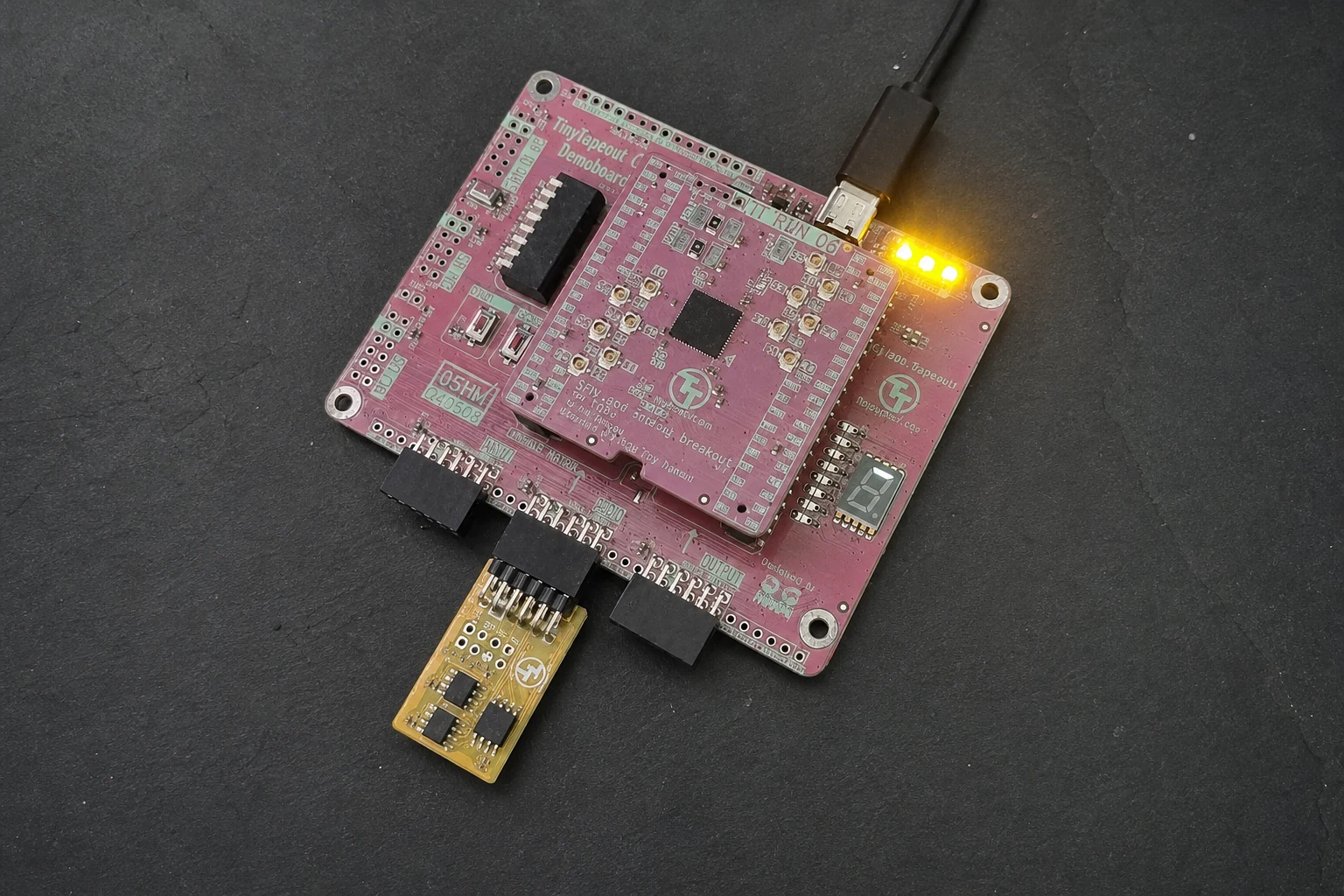
JRB8 running on a Tiny Tapeout demonstration board, with its LEDs illuminated

Verilog / CPU architecture / Compilers

JRB8 8-bit computer

I designed an 8-bit CPU, instruction set, and assembler, tested it in simulation and on a Tang Nano 9K FPGA, then had it fabricated through Tiny Tapeout. I also built a language, compiler, and browser-based compile-flash-run tool.

Explore JRB8
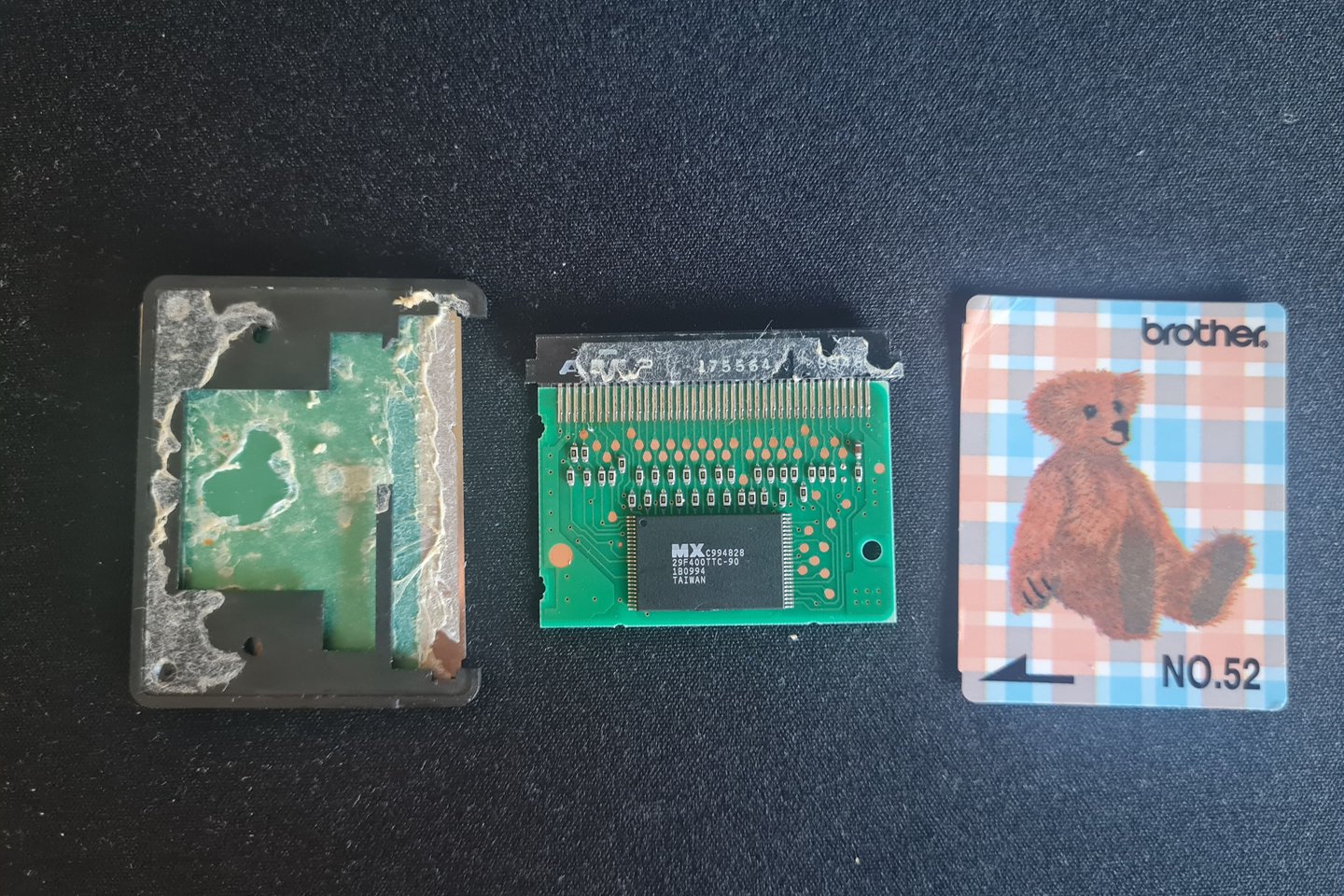
Electronics from my Brother embroidery cartridge reverse-engineering project

Reverse engineering / Hardware interfaces

Brother embroidery cartridge

I built an Arduino reader to dump cartridge memory, investigated stitch data through hex and desktop-software analysis, and made a replacement cartridge the embroidery machine accepted. Others have reused the published findings and code.

Explore the cartridge project
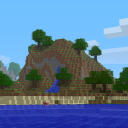
The Minecraft pack.png landscape whose world seed was being searched for

CUDA / GPU profiling / Open source

Minecraft pack.png seed search

I used NVIDIA Visual Profiler to find threads exiting early. Splitting the filtering and tree-position work into separate CUDA kernels doubled the search speed.

View the pull request

Background

Technical skills

Professional
TypeScript, JavaScript, React, Next.js, Go, Python, AWS Lambda
Tooling
Vite, Playwright, Storybook, ESLint, FastAPI, RAG interfaces, LLM-assisted development
Independent projects
C/C++, CUDA, Verilog, C++ inference, STM32, ESP32, PCB design

Learning & credentials

Flare-On reverse engineering
Completed every challenge in 2022–2025.
157th of 4,100+ entrants in 2025.
Burp Suite Certified Practitioner
Certified in 2026. Verify credential
Offensive IoT Exploitation
DEF CON training in firmware and hardware reverse engineering.
BEng (Honours), Software Design
Macquarie University, 2016–2020.

Contact

LinkedIn

Based in Sydney, relocating to the San Francisco Bay Area.